




Blog
AI-Driven Security: From Detection to Defense
In an era where cyber threats evolve at machine speed, human-centric security approaches are no longer enough. The modern threat landscape demands a paradigm shift, one where artificial intelligence and automation don’t merely assist security teams, but fundamentally change how organizations detect, analyze, and respond to threats.
Cybersecurity used to be about throwing more humans at more alerts, but that model is broken. Attackers automate, move fast, blend into normal behavior, and exploit process gaps. Defenders, meanwhile, drown in noisy alerts, siloed tools, and manual workflows.
Traditional detection engines, built on signatures and rigid thresholds, often miss subtle threats while overwhelming security teams with low-value noise.
AI reshapes this dynamic.
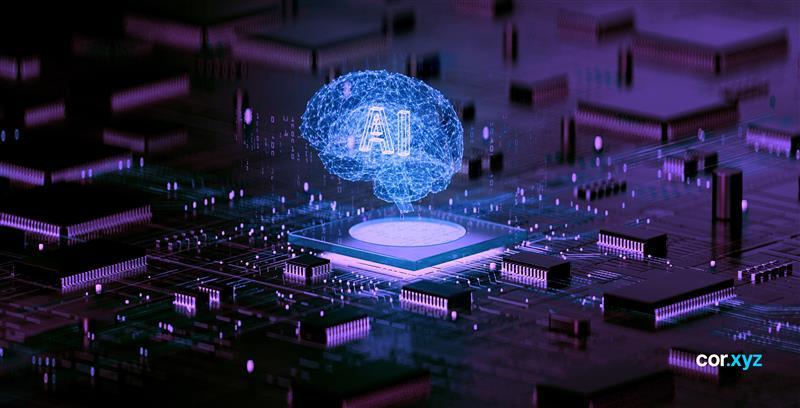
Enter cor.xyz. By combining behavioral analytics with contextual understanding, cor.xyz learns what “normal” looks like for every user, device, application, and environment. Instead of flagging raw anomalies, AI evaluates risk:
- Is this a critical asset?
- Is the identity privileged?
- Does this behavior align with past patterns?
Detection becomes reasoning, not just matching.
cor. AI and automation elevate security teams instead of removing them. It becomes an augmentation layer that filters noise, enriches context, and automates the tedious parts of detection and response. This allows humans to focus on judgment, strategy, and solving complex problems.
The future of security will be defined by:
- AI as augmentation: Pre-analysis, summaries, and recommended actions, with humans in control.
- Automation with guardrails: Clear logic for auto-containment, approvals, and observations.
- Continuous learning: Systems improve with every incident, false positive, and near-miss.
- Business-aligned defense: Prioritization based on what matters most—revenue, trust, compliance, resilience.
- Proactive guidance: AI that tells security teams which initiatives to pursue, what to improve, where to invest, and which risks require preemptive action.
This is not a vision for the future, but what cor. customers experience today.
The shift from detection to defense has already begun. cor. reframes the SOC from an alert factory into a strategic function. The SOC of the next decade won’t be bigger, but smarter.
Ready to redefine your SOC? Discover how cor. AI empowers organizations to stay ahead of threats.
.jpg&w=3840&q=75)